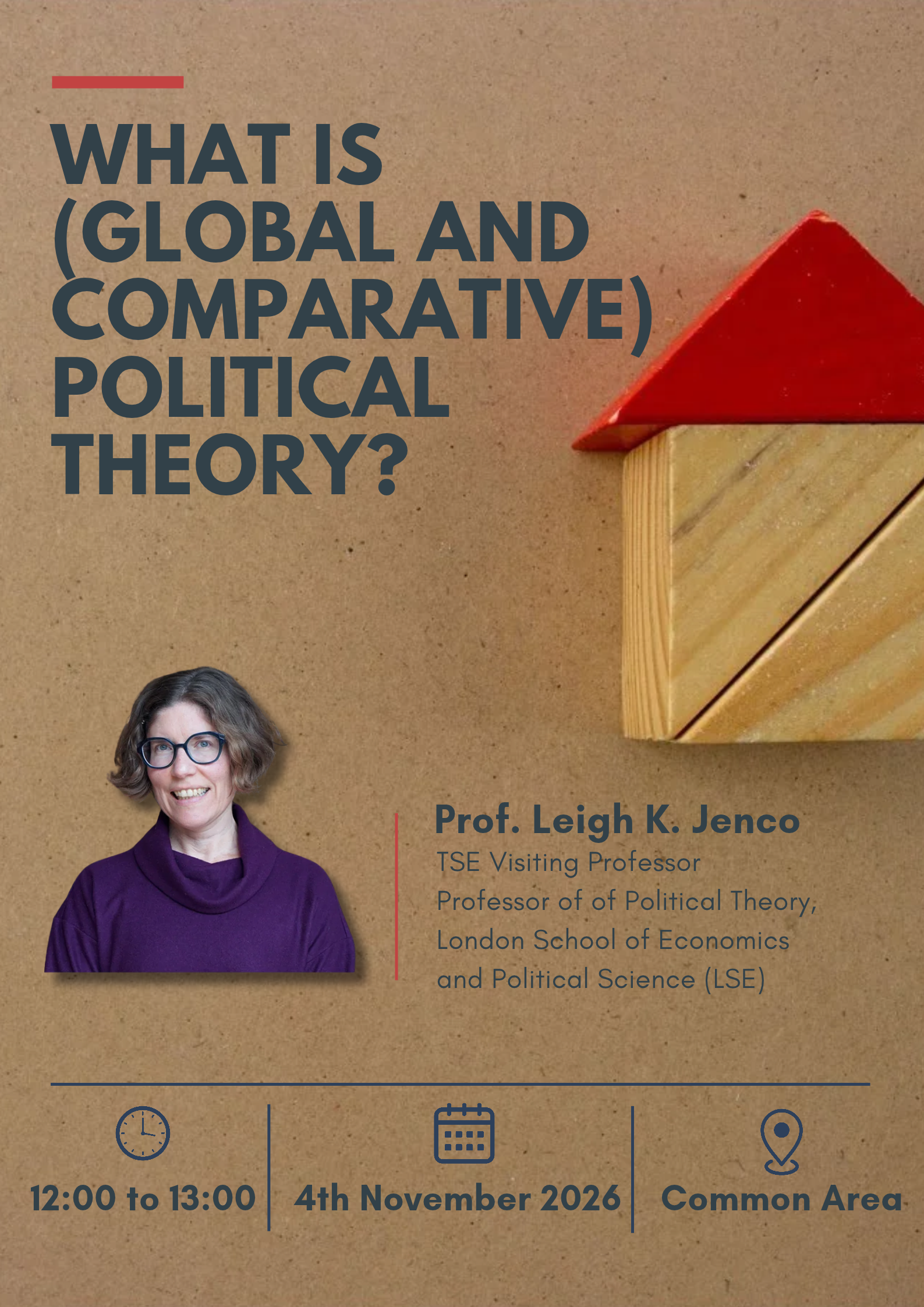
Lecture Abstract:
In this talk I introduce what political theory is, and I examine some methods for making it more global and comparative. Political theory is a field of study that offers a systematic reflection on political life, often for critical and normative purposes. ‘Normative’ means that political theory examines and defends claims about how things should be, not just about how things are. Historically this field was constituted by debates over a set of ideas written about by “dead white men” from Europe and America. Nowadays many people are interested in going beyond this Eurocentric approach, but few have given serious thought to what we do with the recognition that political theory is something people have done “everywhere and everywhen.” What do we do with these hugely disparate ideas and bodies of thought? How do we bring them together to inform political life in a meaningful way, that goes beyond merely accounting for their existence? Some have argued we should simply find the best ideas, or compare arguments from traditions understood as bounded forms of dogma or essential characteristics.
In this talk, I explain problems with all these views, and then defend my own: I argue that globally diverse views across time and space can be gathered into open-ended conversations to create a temporary, revisable, and contestable coherence without imposing a fixed lineage, origin, or hierarchy—in other words, grouping them under something like a “hashtag." We can continually extend our learning and the global conversation by “tagging” additional ideas, texts, and experiences to bring them together for shared scrutiny. In this process, comparison as a method helps us comprehend both sameness and difference as dynamic and contingent features that change based on the questions we are asking, rather than an essential or given quality of cultures, texts or ideas.
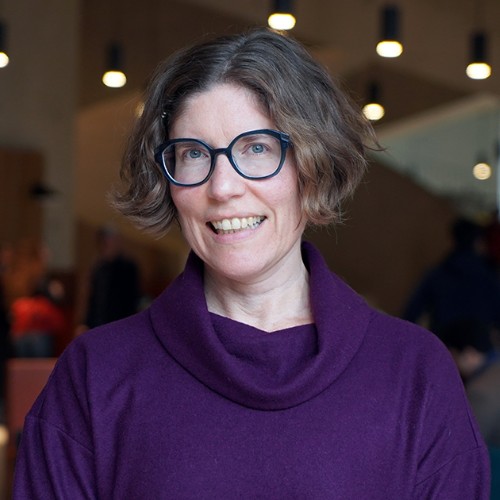
Speaker Bio:
Leigh Jenco (BA, Bard College; MA and PhD, University of Chicago) joined LSE in 2012, after teaching at the National University of Singapore. She has held visiting positions at the Institute of Modern History, Academia Sinica, Taiwan; the Department of History, National Taiwan University; and the University of Heidelberg. She was associate editor of the flagship journal American Political Science Review (2016-2020) and principal investigator for the Humanities in the European Research Area grant project "East Asian Uses of the European Past," funded by the European Commission. She is currently Project Lead for the three-year, £1.5 million global convening project Chinese Global Orders funded by the British Academy.
Her first two monographs—Making the Political: Founding and Action in the Political Theory of Zhang Shizhao (Cambridge UP, 2010) and Changing Referents: Learning Across Space and Time in China and the West (Oxford UP, 2015)—pioneered the engagement of normative political theory with the intellectual history of modern China. Her current research examines folksong compendia of the late Ming and early Qing periods (16th-17th centuries) as sources of non-elite experience and evidence of their participation in cultural production. In particular, she theorizes transmission--a longstanding preoccupation of the Chinese textual tradition, in which resources from the past were compiled and preserved for future readers—as a key practice through which non-elite experience can be made present in, but also pose challenges to, written sources as enduring sites of political as well as aesthetic value.